– Satyakam Ray
There is no greater agony than bearing an untold story inside you. – Maya Angelou.
History is not only about who won the battles, who owned what, or what dramatic incidents happened over the centuries. Personal lives, struggles, achievements, perceptions, and ambitions of the people being studied are often overlooked in historians’ narratives. Individual experiences can sum up a generation’s existence and way of life. These human touches are usually missing from history books.
Anandpur is a small, influential town in the Keonjhar district, my mother’s hometown. One of my favorite vacation spots during my school days has always been the vast greenery surrounding Keonjhar. I have fond memories of the place.
I listen to my mother’s stories over a cup of tea. She talks about growing up as a kid, a teen, and an adult. This chronicle is all about the stories I have heard from my mother since childhood.
This chronicle is a collection of real-life short stories experienced by Maa and passed on to me as a heritage. It is an earnest effort to capture the nuisance and nitty-gritty of social life in the 1970s-80s.
I heard the anecdote over a hot ginger tea on a lazy weekend afternoon.
The tea was getting cold, so I persuaded Maa to stay with me and tell me an Anandpur story. She thought for a moment, then began the story. The story occurred in 1983, when she worked at Brajabandhu Vidya Pitha (High School).
The high school was located near the football field. The field lies beside a vast cashew plantation. The cashew garden borders the banks of the Baitarani River, which flows past Anandpur.
The river floods every year, engulfing the vast expanse of cashew gardens. Snakes, animals, and logs from the jungle move from the upper section of the river. They are washed into the lower delta or onto the banks.
In this way, when floodwater goes away, occasionally, some primate forms from the jungle stay in the cashew garden. They sometimes roam around outside. This causes amusement or, instead, horror to the curious onlookers.
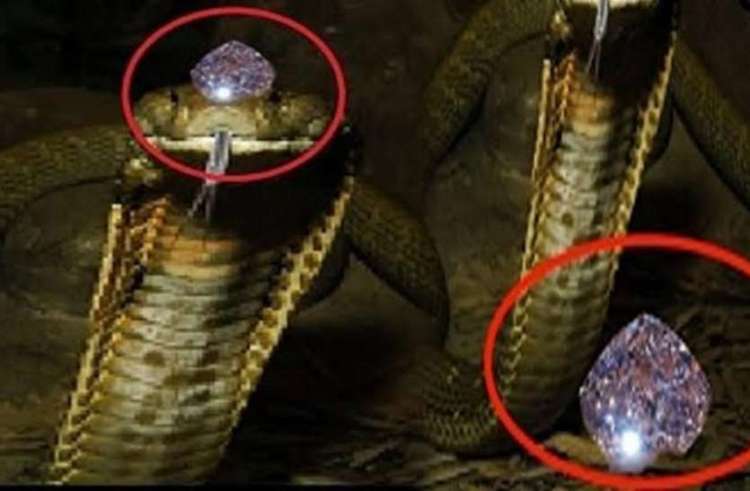
Maa knew that one such incident was the meandering Maninaag. For readers curious about this Maninaag, this type of cobra is unique. It is distinguished by a mani, or precious stone, on its hood. This stone radiates light at night. It is a rare sight. For many scientists, this type of snake is merely a myth.
Yet sporadic references to Naagmani and its powers have appeared in folklore, and only a few eyewitnesses have confirmed these accounts.
In the story, teenagers attended tuition classes on the M.E. school grounds near the high school. The high school boundary was visible from where the students sat.
One enterprising student once noted an unusual event beyond his fathoming. Around 7 p.m., a light traveled 1-2 feet above the ground. It looked like a torch, but the torch holder was not visible. It’s unusual, given that the place was secluded and nobody went near the playground or cashew garden at night. The same incident kept happening for a week.
Unable to keep the incident to himself, he blurted it out to his friends. Soon, the whole gang saw the bizarre incident. The teacher who gave the tuition also learned. The mystery became a hot topic of discussion among teachers. Several theories were proposed. Many guessed it was a ghost!
Unable to contain their excitement, they decided to test the veracity of the claims. Here came the enthusiastic soul, a school worker, who promised to examine the matter personally.
The person (Rabi) waited near the high school boundary wall, where the torch allegedly passed at a set time. A group of teachers and students stayed on the school premises, bated breath.
It was almost 7 p.m. It was pitch dark, and total silence prevailed. The group heard only a few howling dogs in the distance. On that misty winter evening, occasional rumblings of the leaves and the tree swaying were audible nearby.
Rabi’s heart was beating very fast. Finally, the propitious moment came when the torch holder came into view. It was a very long snake, about 7-8 feet long. Rabi described it as having a glowing stone or pearl shining on its hood. The snake’s hood was at least two feet above the ground. It was moving at a majestic pace, with a distinctive swag, and making a deep hissing sound. Upon closer examination, Rabi found that the light had a slight yellowish tint.
It is an actual incident, with no iota of fabrication or exaggeration. It is the eyewitness account Maa heard. Of course, after the encounter, Rabi fainted briefly. The gang hiding on the school premises came to the rescue.
The incident spread like wildfire the next day. According to Maa’s not-so-vivid memory, nothing happened after that. The tuition classes were canceled from the school premises for clear reasons. The story has become a small-town myth, and few people believe it. Still, the account was entirely authentic.
Maybe the snake had escaped the flood in the jungle and decided to stay longer in the cashew jungle. Every day, the snake appeared from nowhere near the cashew garden. It passed the school boundary and crossed the road. Then it vanished from sight.
Nobody knows what happened to that snake, or how the onlookers reacted to its presence.
The Naagmani myth continues today. If any resident of Anandpur is reading this story and has any information about it, please share your version with me. You’re more than welcome to do so. I am curious, and so are my readers!

 The Witty Stride
Leave a reply to Anandapur Chronicles: Encountering wild elephants – The Witty Stride Cancel reply