– Satyakam Ray
On 16 April 2020, a vigilante group lynched two Hindu Sadhus and their driver in Gadchinchale Village, Palghar District, Maharashtra, India. The incident was stimulated by WhatsApp rumors of thieves operating in the area during the countrywide coronavirus lockdown.
According to a Reuters report, 63 cow vigilante attacks occurred in India between 2010 and mid-2017. In these attacks between 2010 and June 2017, 28 Indians, out of which 24 were Muslims, were killed, and 124 were injured.

While rummaging through the internet/newspapers, I encountered many incidents of mob lynchings and horrifying brutality. These incidents trouble sensible citizens to the core of their hearts.
The Story of the Fox Running Towards the Sea: While pondering the whole conundrum, I remembered a beautiful short Story we used to study in the 9th standard. According to my not-so-vivid recollection, the story goes like this: There was a jungle with many animals living peacefully. One day, one fox started running wildly in one direction for reasons unknown to others.
Without asking the fox why he was running so fast, a group of other foxes ran behind him. After a while, all the animals ran in unison in one direction, with the fox leading the way. Guess where the horde was running towards? To the sea! To commit mass suicide?!
The psychological phenomenon is known as the horde mentality.
Blindly following others without asking valid, logical questions is a form of the horde mentality. It can be smelling something fishy from hearsay, believing media conspiracy theories, or supporting every policy decision. The urge to step away from the populist mindset or opinion is key to broadening horizons and opportunities.
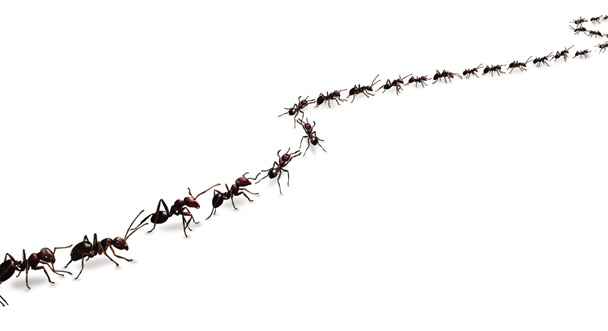
The Ant Theory: The horde mentality is not always harmful or suicidal. It can also be used constructively. When ants search for food, they form a line to follow. The leader provides the following members with direction and information on intensity via a chemical signal, a pheromone.
Ants communicate via this hormone, forming a signaling cascade that enables them to coordinate their actions. On the way back, they follow the pheromone trail.
The Moth Phenomena: Science doesn’t yet understand why moths and other insects are attracted to lights. Phototaxis, the movement of organisms in response to light, is used to describe this phenomenon. Insects that move toward lights are positively Phototactic, while others, like cockroaches that move away from sunlight, are negatively Phototactic.
One of the most popular theories is that positive Phototaxis in insects moves them toward light because it serves as a guide. Many insects navigate by keeping a natural light source, such as the Sun, in their sights.
However, insects can quickly become confused by artificial light. They may mistake a light fixture for the Sun or the Moon. Since artificial light emits beams in all directions, insects can’t orient themselves to it at the right angle. Instead, they try to keep the artificial light at a constant angle.
This causes insects to repeatedly circle around the artificial light.
Horde Mentality in Social Circles and Daily Lives: Humans exhibit a similar horde mentality, evident across various aspects of life. For example, suppose one person detects an unusual odor and reports it to others. In that case, the others in the room also smell something strange, seemingly by automatic or miraculous contagion.
The social bitching and rumor-mongering that often happen in our society are examples of horde mentality. Popular TV shows also thrive on this herd mentality, catering to the public with fake news and scurrilous WhatsApp forwards passed off as breaking news.
The psychological pressure to stay on the same page often leads to absurd actions without any reasoning.
If an accident occurs on the road, a crowd generally gathers at the scene, not to help the victim, but to watch the unfolding event. The mob forms quickly and can consist of anyone, from everyday bystanders to members of religious or political parties. Similarly, the mob doesn’t ask logical questions and starts immediate action, like beating or thrashing a person.

There are several reasons why people follow a particular leader. Some people follow a leader because of charisma, personality, and leadership skills. Some past good deeds prevent people from questioning him further in his leadership path. People with low acumen often can’t see the road ahead and blindly follow their leader.
The religious leaders are often found to be frauds after achieving cult status and having a gang of blind believers. During the emergency, many people supported the leader of the time, disregarding their conscience and self-respect. Such behavior is also palpable nowadays.
Adherents of any doctrine are close-minded and don’t follow logic/reasoning.
Leadership Attributes: Leadership is paramount to the success of any endeavor. The leader leads amid many drawbacks and makes a path for his followers. However, followers should continually communicate with the leader to determine whether their approach is appropriate.
Communication should be two-way, with logical questioning and clear explanations.
It’s up to the followers to choose their leader wisely.
Would you instead follow a shrewd fox or an assiduous ant, or just circle like the moths? The choice is yours!
 The Witty Stride
Leave a comment