-Satyakam Ray
Well, the answer to this diabolical question is yes. However, it may hurt any individual’s social consciousness.
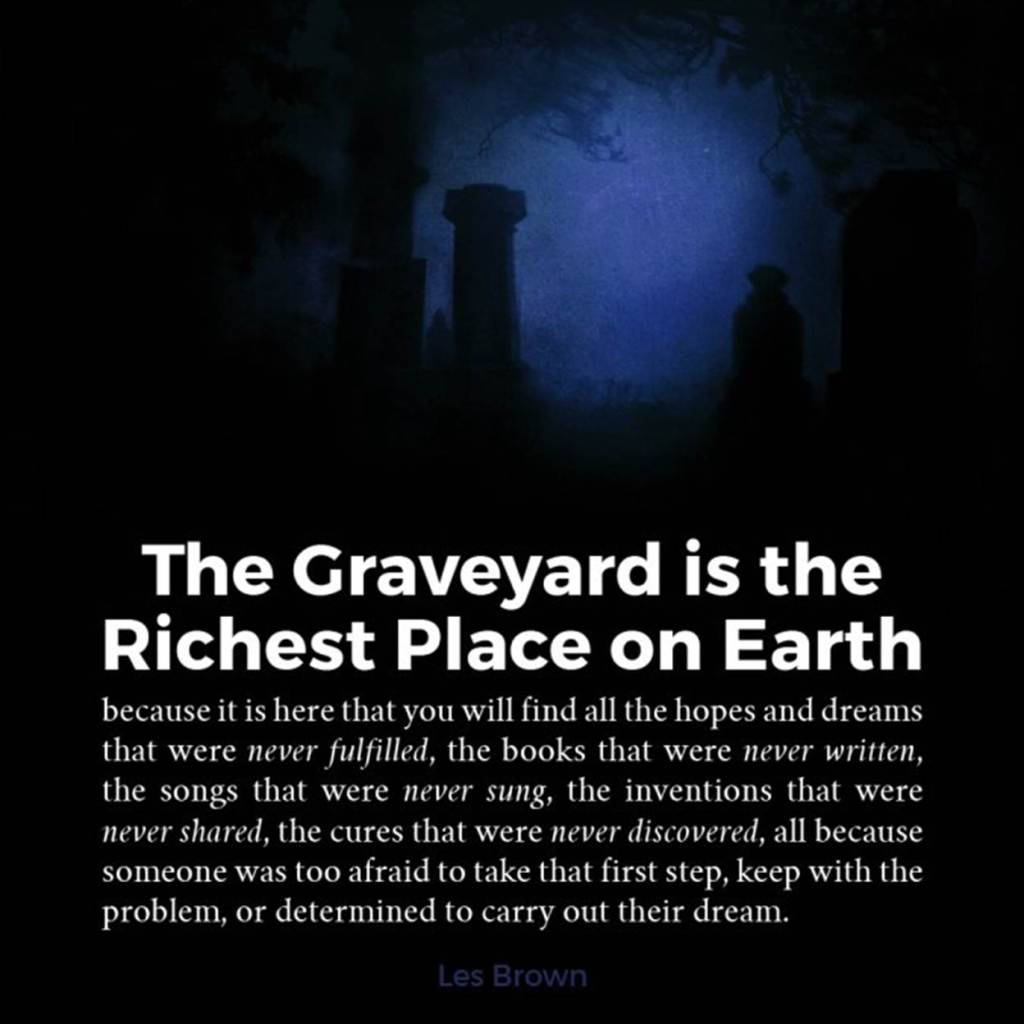
The graveyard is the resting place of many lost souls who once lived on this earth, like us, who led eventful lives and finally left it forever. The angst, uncertainty, unfulfilled desires, and unrealized dreams weigh heavily on them. Alongside all that, in a semblance of everyday life, some of the most excellent yet undisclosed ideas are dormant. Of course, those ideas cannot be extracted or realized at this time.

Humanity’s advancement and evolution have been made possible by the continuous generation and implementation of ideas to address social problems. During this course, some of the most remarkable ideas were conceived and documented in history books as miraculous inventions or discoveries. Other, less popular ideas were discarded and fell into disuse over time. Some of the best views were initially rejected and were vindicated years or centuries later.
As Arthur Schopenhauer recognized, an important idea or truth must ‘endure a hostile reception before it is accepted when he said, ‘First, it is ridiculed. Second, it is violently opposed. Third, it is accepted as being self-evident.’ Other philosophers were initially unconvinced when Pythagoras proposed that the Earth is not flat. Galileo, the father of modern science, was vehemently opposed by scientists when he asserted that Earth is not the center of the universe.
Similarly, Darwin’s theory of natural selection and the pasteurization process faced constant resistance. Countless scientific discoveries have faced backlash because of religious intolerance, resistance to change, prejudice, and envy among fellow scientists.

Ed Sheeran is one of the most famous musicians in the world, selling albums to fans of all ages. Still, record labels rejected Sheeran because he was “slightly chubby and ginger.” Madonna, Elvis Presley, and the Beatles all initially faced rejection. The editor of the Christopher Little Literary Agency had advised J.K. Rowling to get a day job since she had little chance of making money in children’s books! Having sold only 800 copies in its limited first release, The Alchemist by Paulo Coelho found a new publisher and went on to sell 75 million copies.
The Industrial Revolution also attracted numerous apocalyptic predictions before its true potential was realized. The same applies to the 1991 Indian economic reforms. George Bernard Shaw famously said, ‘All great truths begin as blasphemies. All great ideas in science, literature, music, medicine, social science, politics, and the economy have endured cycles of rejection, rebuttal, and resistance for many years before being accepted as the new norm.
Heraclitus, the Greek Philosopher, said, “Change is the only constant in life.” However hard it is to halt the process of change, it is impossible to avoid the inevitable. From Edison’s invention of electricity to the development of silicon chips in the 1970s, technological advancements have enabled us to lead comfortable, tech-savvy lives today. Similar socio-economic conditions and breakthroughs also helped overcome the stigma of the past.
Mindfulness, a healthy attitude towards change, and Rationality are the key factors.
When life is going well, we want to keep it that way forever. But sadly, that’s not how it works. An open, rational mind and a healthy attitude toward change are paramount for the progress of individuals and society. Mindfulness is the practice of focusing on the present without judgment. It helps instill the habit of seeing things as they are and of accepting the inevitable without mental resistance.

In the context of the ideation process and ever-changing scenarios, it is imperative to examine how to preserve the integrity of many ordinary individuals’ soon-to-be-extinct ideas and to explain the perpetual delay in bringing brilliant ideas to fruition.
Self-doubt, the external environment, anxiety, and fear of rejection can hinder a great idea from blooming.
- Am I worthy? People often have low opinions of their talents and innate creativity and compare themselves to more successful individuals before voicing new ideas. Their lack of self-confidence and self-awareness leads them to believe that someone might already have had the idea.
- The environment of Discouragement: Before executing any innovative idea, the family offers the first and foremost resistance. Then come the friends, relatives, and peer groups who try to persuade us to accept things rather than pursue an imaginary goal. Many great ideas fail to overcome this emotional barrier and are lost forever.
- Lack of knowledge about Pitching: New ideas need endorsements and investment. Many creative individuals are unsure who to approach or how to pitch their ideas effectively. A lack of patent know-how and the business value of the concept or product often diminishes many inventors’ enthusiasm for bringing their dream projects to life.
- Theory vs. Practicality: Ideas on a blackboard or in a notebook differ from their practical execution. There is a slight gap between a fantastic idea on paper and its practical usefulness. Before pitching it to anyone, one must find ways to bring the plan to life.
- Lack of Reward: Many prioritize instant gratification through awards, recognition, and financial compensation. Sadly, in our current social structure, academics and business organizations often do not reward innovative ideas solely based on merit. That discourages many dilettantes in innovation.
- Resistance to change: Most people are reluctant to change their lifestyles. Fear of the unknown and uncertainty overpowers their eagerness to embrace new ideas.
- Procrastination: The “I will do it later” syndrome consistently impedes task completion, even for a master procrastinator, despite their talent. The delay in executing the idea, lack of commitment, and lack of desire to work on complex issues led to the stagnation of creativity over time.
- Envy: Many established scientists and literary figures envy the promising ideas of newcomers in their fields. They use their influence and authority to keep their voice unheard forever.
- Fear of rejection: First-hand rejection can erode a person’s confidence and enthusiasm when pitching an idea. Very few individuals possess the patience, perseverance, mental stamina, and focus necessary to overcome all the barriers that arise after the first rejection.
Careful deliberation about finding the next “new” and preserving the sanctity of the good old ways is the way forward.
Solution: No one knows everything; there is always room for new ideas and perspectives to blossom. The idea that old ideas are always rotten and unused is also wrong. The way forward is careful deliberation on how to find the next “new” while preserving the sanctity of traditional ways.
Grooming self-environmental awareness is the first step toward voicing an idea. One must be mentally strong to avoid the emotional barriers of family and friends. Connections with investors, astute business acumen, and ingenious ways to convince others are also essential for the success of an idea.
Society, in general, should adopt positive changes and be more flexible. The reward process for innovation should be quick, and early brainstorming should be encouraged in schools. One should seize the opportunity at the sight of it, without fear of rejection or procrastination. Lastly, established craftsmen in any field should be more generous and accommodating to promote the craft’s prosperity.

We must either enshroud any idea for oblivion or embrace it with both arms to stay relevant in an ever-changing paradigm. Next time, we should not bury our thoughts in the grave but start acting on them, even if they may seem silly at first. The true salvation of the soul is achieved when it realizes all its unfulfilled ideas and then seeks the ultimate rest. After all, it is not pleasant to be identified as a believer in a “flat earth” anymore!
 The Witty Stride
Leave a comment