-Satyakam Ray

Here’s a simple yet mind-boggling puzzle to test your analytical mind. Look at the nine dots above, and now follow the rules.
Rules to solve the above puzzle:
- Link all 9 dots using 4 straight lines.
- Do not lift the pen or pencil.
- The same line cannot be traced back more than once.
Many of you may have encountered the puzzle before, and some novice puzzle enthusiasts might even be trying it for the first time. Even experienced puzzle solvers generally get stuck in the middle when they try it for the first time. At some point, it may look like this.

After countless exhausting trials, many give up. Well, the problem lies in one-dimensional thinking. Many assume the puzzle’s scope is within the 9-dot box or square, which is why they often get stuck. If anyone suggests extending the drawing beyond the dots, it seems tangible enough to warrant further consideration. The final solution appears as follows.
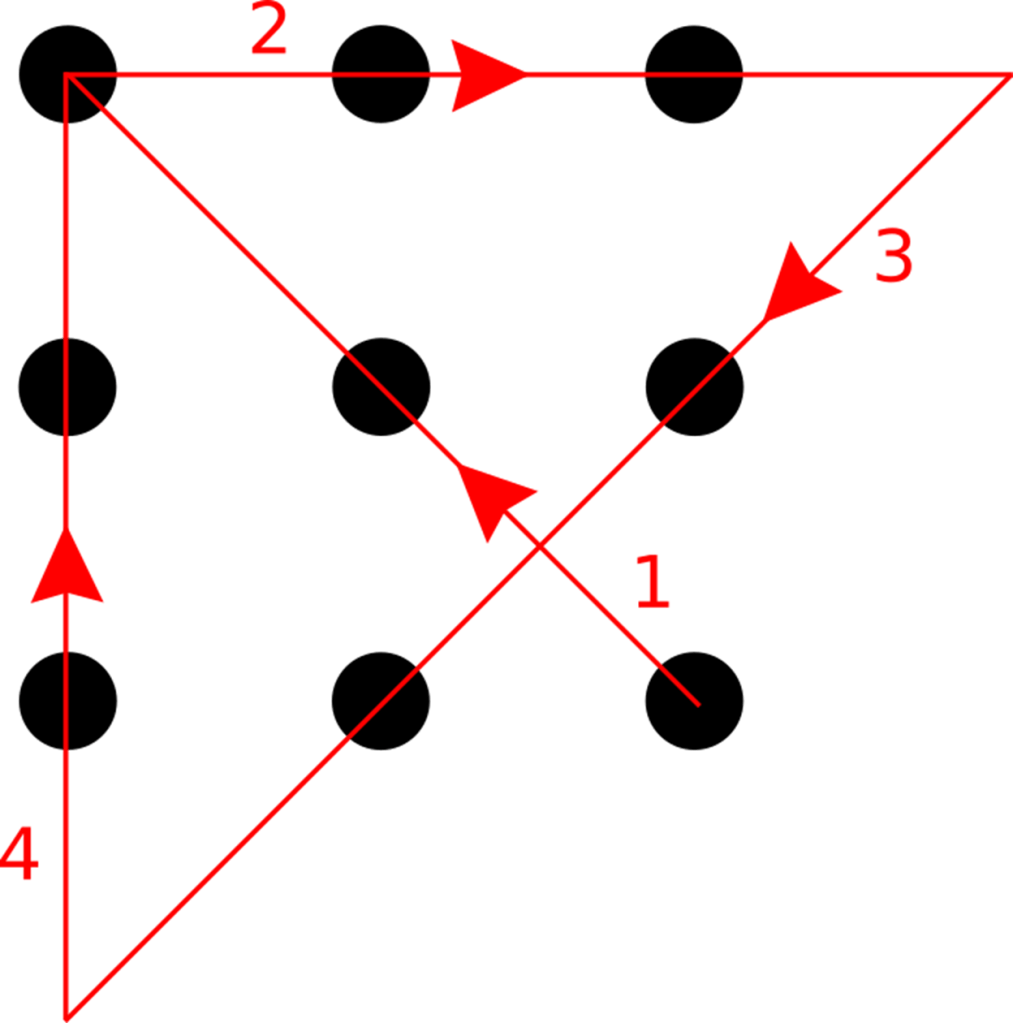
The solution is unique. However, one can start at any point. Of course, the above answer is only one variant.
The phrase “thinking outside the box” restates this solution strategy. The puzzle appears complicated only because people often imagine a boundary around the edge of the dot array.
The gist of the puzzle is to encourage people to think outside the box. This may apply to solving a problem or changing one’s perception of life.
History of the 9-dot problem:
Yet it may sound clichéd nowadays to discuss the 9-dot problem or out-of-the-box thinking, as the concepts are old and overused.
In 1969, John Adair claimed to have introduced the nine-dot problem. Mike Vance, a management consultant, asserted that the puzzle’s use in consultancy circles stems from Walt Disney Company corporate culture, which was used in-house.

This puzzle was analogous to the story of Columbus’s egg. It appeared in Sam Loyd’s 1914 Cyclopedia of Puzzles. Sam Loyd’s original formulation of the puzzle labeled it as “Christopher Columbus’ egg puzzle.”
Out-of-the-box-ideas – of Past & Present:
The generation and successful execution of new ideas to address complex ongoing problems or to reinvent how specific tasks are performed have always been key to social evolution. Some examples of past and present out-of-the-box ideas are noteworthy and warrant highlighting in today’s context.
- The Boycott: In 1880, British landowner Charles Boycott evicted tenant farmers and refused to lower rents in County Mayo, Ireland. Servants, farmhands, store clerks, and even the mailman boycotted him, refusing to serve him or his family. He agreed to a 10 percent rent reduction in an apparent damage-control measure. Since then, it has gained popularity, particularly on Twitter.
- Satyagraha: In 1907, Mohandas Gandhi led a campaign of civil disobedience against laws that discriminated against Indians in South Africa. Satyagraha, or “holding fast to the truth,” won concessions from the South African government.
- Microlending: In Bangladesh, Economist Muhammad Yunus found that small loans of as little as $25 could help impoverished artisans launch thriving businesses. Grameen Bank pioneered microlending in 1976. Grameen Bank provides small but critical loans to independent business owners in low-income nations and neighborhoods.
- Dyson’s thoughts on metabolism: Some biologists favor an RNA-first model of the origin of life, while others favor a DNA-first model. However, after a thorough study, Freeman Dyson argued that metabolism is the primary source of energy. This has been invaluable in the study of medicine to date.
- Big Bang Theory: The Big Bang theory assumes that the speed of light is not constant in an expanding universe. This has helped us understand the universe somewhat better than other models have.
- The Choreographic Research Lab, also known as Choreolab, is a dance performance space where artists can explore their creative vision through dance. The dance routines differ from traditional ones and are even more impressive than modern ones.
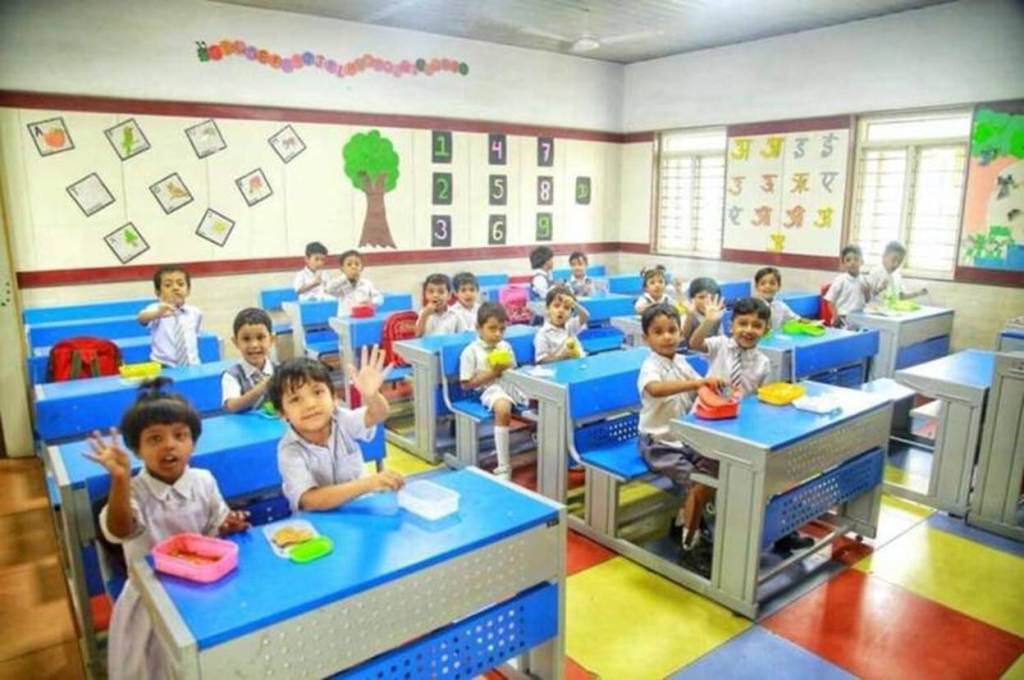
- In the Delhi education model, government schools were transformed into upscale private schools at minimal cost through innovations in administration and supply chain management. The fact that another state, such as Maharashtra, is considering implementing the Delhi model in its education system speaks volumes about its impact.
- Abraham Wald was a mathematician and statistician in the Statistical Research Group (SRG) for much of World War II. One of the projects was to determine how to reduce attrition among aircraft and crews lost in battle. So, data were collected on the number and locations of bullet holes on planes returning from a conflict. Most of us would say those places needed more armor. Wald said the opposite was true: The fact that the planes came back with bullet holes in those locations proved that the aircraft could be shot there and still survive. Wald identified areas requiring additional armor by noting the absence of bullet holes on returning aircraft.
- One of the best examples of customer personalization is Coca-Cola’s “Share a Coke Campaign.” In June 2010, the company launched an innovative program in Australia to connect with its customers. Customers can find a bottle or a can labeled with their friends’ names and share it with their friends and family.
- HP aims to create technology that improves life for everyone, everywhere. The company’s Boise office features a designated Makerspace where employees have access to tools, technologies, and supplies for tinkering, inventing, and collaborating. The campus also hosts an annual “Bring Your Inventor to Work Day,” inviting employees’ children to participate in a full day of interactive events led, hosted, and staffed by employee volunteers.
- Other companies include Lever, Blizzard Entertainment, Slack, PGAV Destinations, TAMKO, Addteq, Funko, and CarGurus.
- The Chennai-based e-commerce education start-up Flintobox sells toys conceptualized by educators, prototyped by designers, and manufactured by top-of-the-line printers. These toys are shipped to little children in a box every month. Similarly, Wonderboxx, Zaza Box, and Good Box are the brainchildren of Indian entrepreneurs with innovative thinking.
Many unconventional ideas have been successfully implemented across fields such as science, business, marketing, entrepreneurship, dance, art, literature, political science, and administration.
Factors behind the 9 dots:
Several factors contribute to ideation in the 9-dot puzzle.
- Open mind- The origin of all innovative ideas is made possible by inventors’ open minds. The unbiased, unprejudiced ideation process occurs when the mind is open to numerous inputs, including a child’s perspective, which can provide valuable information. It also involves checking ideas for practicality and applying in-depth knowledge about the relevant industry.
- To develop an open mind, one can adopt new habits such as writing, learning about other Industries, taking a foreign language class, reading a novel from an unfamiliar genre, taking a daily evening stroll, or even showering.
The Indian 9-Dots:
Jugaad, the Indian equivalent of the iconic 9-dots puzzle, usually refers to a non-conventional, frugal innovation, often called a “hack.” It could also refer to an innovative fix. Jugaad is also frequently used to signify creativity, involving the adaptation of existing resources or the creation of new ones with minimal resources. While executing a Jugaad, the current rules can be bent.
Indian Jugaads are innovative and cheap. Sometimes, they are so endemic and hilarious that one can rightfully say, “It happens only in India.”
- Jugaad can also refer to a quadricycle—a means of transportation constructed from wooden planks and using SUV parts—known as kuddukka and pietereda in northern India. If ingeniously developed, a low-cost vehicle costing around Rs. 50,000 can be considered a Jugaad.
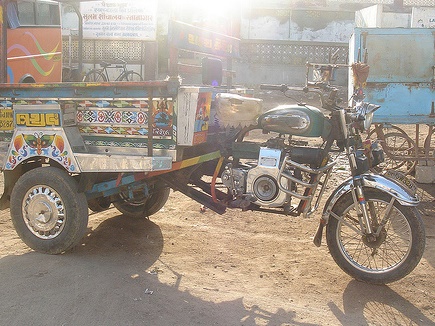
- A variant of the Jugaad vehicle is found in Tamil Nadu, South India. The name roughly translates to “fishbed vehicles” because it originated among local fishermen who needed a quick, inexpensive way to transport their catch.
- MittiCool, the low-cost, biodegradable clay refrigerator, is an excellent example of Jugaad’s innovation. Many users report that food tastes better when stored in MittiCool than in a conventional refrigerator because it keeps the food moist rather than drying it out.

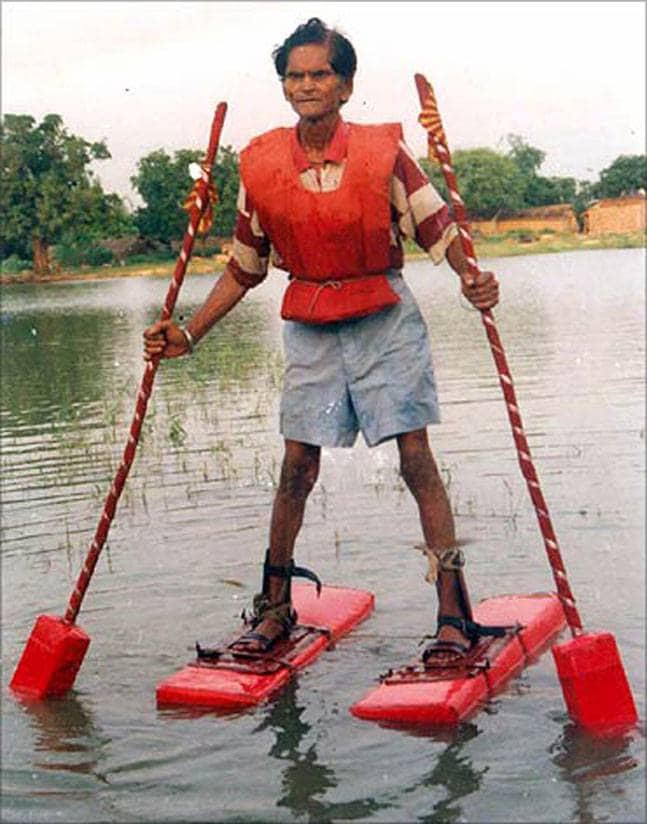
- Dwarka Prasad Chaurasia, now in his 80s, developed “Water Walking Shoes” in the 1980s to enable people to walk on water during floods. The shoes, which consist of two thermocol floats attached to a rexine, are so helpful that people still use them today.
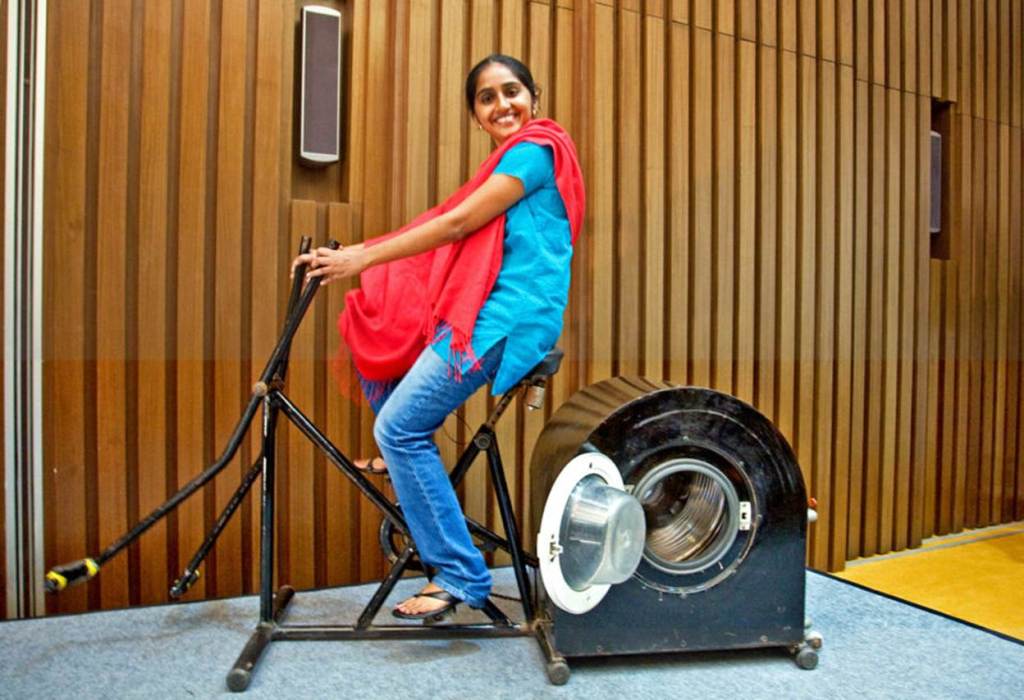
- Remya Jose, a teenager from Malappuram, Kerala, was tired of handwashing clothes and devised an economical solution. She created a washing machine and an exercise machine. It cycles through clothes only after 3-4 minutes of pedaling.
- Two people in Haryana’s Sirsa made a Jugaad cycle to generate electricity. After two hours of pedaling, it can charge an inverter, giving a six-hour backup.
- In 2016, Ram Prasad, a farmer in Banda, Uttar Pradesh, converted an old cycle into a low-cost, fuel-free plow. During a drought, he had to sell his bullock and lacked funds to maintain tractors and other plowing equipment. After years of experimentation, he finally constructed a fuel-free plow with a single wheel, front and rear handles, and digging tines.
- One of the most common Jugaads is making multi-purpose ropes from old sarees. These ropes are strong and can be used for various purposes.
Indians are masters of Jugaads. In every household, if anyone wants to see a Jugaad, they will not be disappointed. Recently, “jugaad” has been used primarily as a derogatory term for an unconventional or unorthodox approach to accomplishing challenging work. Sadly, most Indians resort to Jugaad as a dubious means of achieving their goals. Corruption in any field is usually characterized by the slight bending of rules.
But the Indian Ingenious methods should be appreciated and replicated elsewhere in the world. With a little bit of ethics instilled in the ideation process, any Jugaad may sound classy.
Tackling complex problems using standard methods may not always be adequate. Similarly, Out-of-the-box ideas have generally been associated with the marketing, PR, and advertising industries and corporations. The 9 dots can be a boon for survival and progress in this scenario.
With the advent of the coronavirus, the world faces numerous new challenges and ongoing crises. The 21st-century world is beset by multiple issues, including climate change, deforestation, plastic pollution, economic instability, gender inequality, poverty, air pollution, natural disasters, global health concerns, food security challenges, population aging, urbanization, and social polarization.
The list of problems is nearly endless, and we need to ensure the quick delivery of solutions or strategies to cope. Whether the idea comes from fancier classic 9-dots or simple Indian 9-dots doesn’t matter!
An excellent way is to combine both 9-dot strategies.
On a lighter note,
Savitri decides to marry Satyavan, even though she knows from Narada that he will die in one year. And when Satyavan finally dies, she stays on with the body until Yama appears there to take Satyavan’s soul.
Savitri keeps following Yama. Yama offers her a boon to dissuade her: “Ask for anything except your husband’s life.” Savitri replies in a beautiful display of unconventional thinking, “May I get a hundred sons?”
On the other hand, I have seen a kid showing early signs of Jugaadgiri. She was learning how to play carrom. I showed her how to strike the coins into the holes; in her turn, she simply took the coin by hand and put it in the hole!
That succinctly differentiates between classic 9-dots and Indian 9-dots.
 The Witty Stride
Leave a comment