-Satyakam Ray
One web series, The Family Man 2, has recently gained popularity on the Indian OTT platform. The spy thriller, starring Manoj Bajpayee and Samantha, has become the talk of the town. Apart from the terrorists, Srikant Tiwari (Manoj Bajpayee) has to deal with his family members, specifically his daughter Dhriti. The teenager was adamant and spoke verbatim, which was incomprehensible to Srikant.
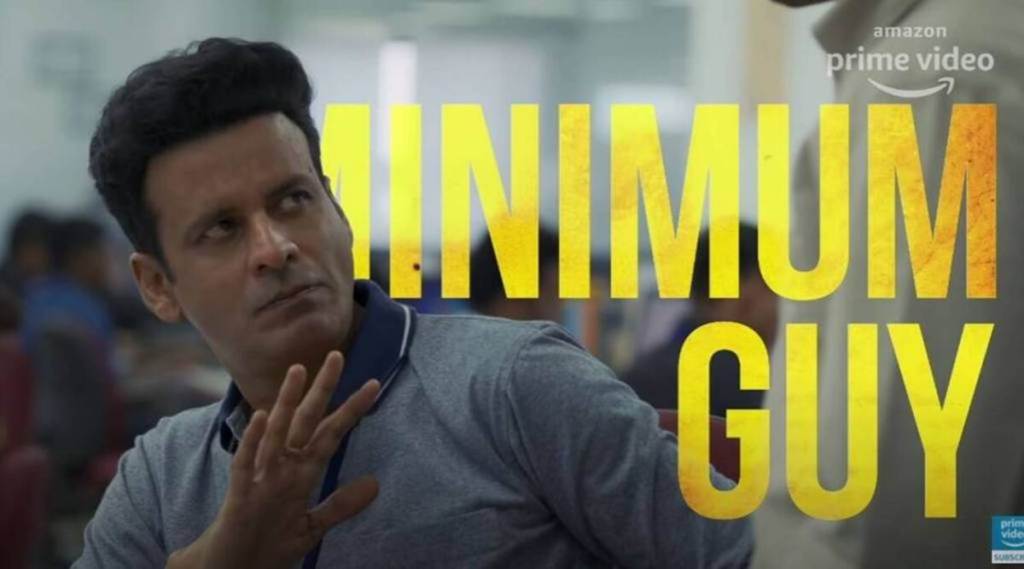
When Dhriti was kidnapped, and Srikant questioned her classmates and friends to elicit vital information regarding the kidnapper, he faced a precarious yet funny situation. The generation gap between the father and daughter was visible. Astonishment and bewilderment were written all over Srikant’s face. While listening to the teenagers’ English, he gave a puzzled look that summed it all up.
During Srikant’s interaction with Dhriti’s classmates, one adjective stood out: “capitalistic baboon.” Of course, Srikant was puzzled as hell! While watching the show, the author also got confused. After googling the meaning of the capitalist baboon, the author didn’t get the head or tail of what had been said. According to the author’s limited intellect, the baboon is a specific monkey in Africa and Asia. Baboon also means jerk in urban jargon. Capitalism is around the corner whenever anyone buys petrol for the bike! But what does the capitalist baboon mean combined? The jerk who brags about materialistic achievements or believes in capitalism in general? Finding a Gen-Z to chat with and find its true meaning is possible! Very hard to find out, though.
The boys and girls aged 15-16 talking about capitalism, socialism, misogyny, patriarchy, and ideological differences sounds odd to people from the 30+ age range. While the theoretical knowledge of the terms may seem alluring and intelligent to some teenagers, actual knowledge is acquired through real-life experiences. The concepts are excellent, but understanding them requires much practical, real-life experience.
It’s funny, considering the dilemma faced by ’90s kids when they hear such verbatim in adulthood. In the ’90s, kids fought over remote controls or video games. The hi-fi words were alien to many youngsters; still, many adults feel the same upon hearing such tongue-twisters. Considering the new world of tech-savvy parentage, it’s a lot of hard work for adults to keep up with the kids nowadays.
Psychologically, the new generation’s mindset has changed drastically over the past few years. Things have become very fast-paced, and those who can’t keep up in the rat race are often discarded as left-out late boomers. The boomer generation, belonging to that old-fashioned notion of things, usually lags behind its offspring. The English-speaking style and word choice have undergone drastic changes. For many, calling out the F word has become a status symbol for the English-speaking learned aristocracy. The augmentation of liberalism has gone beyond its actual territorial influence and missed the subtle nuances of being polished or gentlemanly in general.
In the Popular TVF parody of Roadies, one bald guy mimicking Raghu keeps roasting the contestant by alleging him to be sexist, capitalist, racist, and even an exorcist! The capitalistic baboon was playing in the head of the bald Raghu then! Another noteworthy point in the show was the guy’s address, which mimicked Ranvijay’s. Ranvijay told the contestant that he didn’t know he was a racist! He was heard saying, “Tujhe pata nhi, but tu hai.”
After observing the conversation verbatim, the author decided to remain calm when speaking with Gen-Z people next time. With a pocket notebook ready, it will be tempting to note down some new urban jargon spoken by the incredible bunch of baboons. Oops! Did the author say baboons? It is not an ideal way to end an article, but Fworthy should mention the magic word to people with an 8-second attention span.
 The Witty Stride
Leave a comment