The real adventure begins after hopping on a train. It’s the journey, not the destination. The blueprints for a successful train-travel diary hinge on the uncertainties of co-passengers’ attitudes. It also depends on having a clean bathroom. It also relies on the availability of munching options and the food pack sent from home. The atmosphere around the train premises is essential. Having a few elderly uncles or aunts around, ready to gossip and share life advice, adds to the experience. It combines more factors that make the journey an unforgettable experience, rather than merely arriving at the destination. Sometimes, upon arriving at the destination, it feels terrible. We crave the journey to continue. We want it to last for a few more stations.
Train reservations, whether for sleeper, AC 3-tier, 2-tier, or 1-tier classes, are especially critical. Because India is a populous country, a relatively high number of people travel without valid reservations. After boarding the train, some passengers will have trouble finding their assigned seats because they are already occupied. The case of RACs is particularly frustrating. Both travelers must be seated together. The TT later allocates another vacant seat to one of them.
Co-passengers may opt for a window seat once their assigned seat is confirmed. It provides a view that helps alleviate boredom. Many co-passengers introduce themselves to start chit-chatting and create a happy vibe. Few stay shy and prefer to sleep on the upper berth the whole time. Sitting beside the window, I take in the view outside the train. Countless platforms cross in the distance. Beautiful scenery unfolds along the way. I see a panoramic view of the upcoming food stalls. A few chatty passengers get on quickly and play games to pass the time.
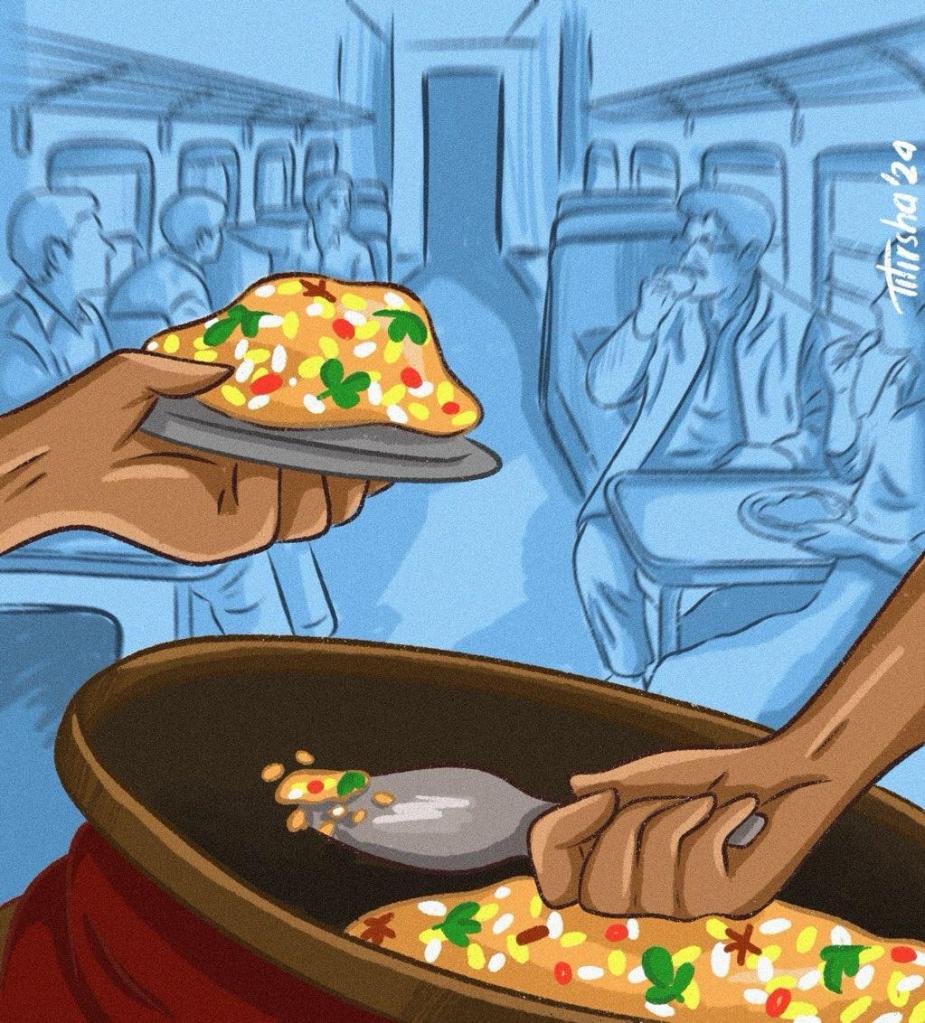
The pantry’s food items are loaded onto the train at specific platforms. These include samosas, bread pakodas, various snacks, many cups of tea, and a few street foods. This enhances the beauty of the train journey. It kills boredom and lets travelers snack before lunch or dinner. Many would argue that hygiene is an issue with these savory items. It’s partially true. Who cares, anyway, on the long train journey? Throughout these meals, side cravings, and tea, many find lost connections, create new friendships, or find romance.
Food sharing during lunch or dinner breaks allows passengers to analyze cultural identities. Gossip lets them discuss the mannerisms we strive to adopt, among other things. Co-passengers closely observe the eating style, variety, and basic manners. They sample the culture of another region firsthand. Some mock it, while others appreciate it and learn from it. A Bengali lady asked the author if all Odia eat Subway meals. I had a takeaway sub during one of my train journeys. She was intrigued by what she saw and was generally curious about it.
The wish to share life goals with strangers in the darkness is quite strange. This happens before the lights go off after dinner. Few share their career and life goals. They proudly show off their achievements to a nodding co-passenger. They won’t see this co-passenger again later in their lifetime. It’s flexing on a moving train that makes everything in conversation shaky. Many seek to explore primal behavior as their objectivity lies in pleasure. Nobody will talk about those encounters as the train reaches the destination, as it’s moving fuel out there.
These formal and informal social interactions happen on the train during the journey. The events stay unforgettable for travelers, but it’s an unbreakable code not to speak about them after the trip. The people I interact with, the conversations, and the events will pass. Yet, the remembrance of a happy journey will linger in my heart forever. Because what happens on the train remains on the train!
 The Witty Stride
Leave a comment