The wait at the railway station to board the train is long. Settling into the allotted seat with luggage causes a minor commotion. Passengers exchange first greetings with fellow travelers. Casual conversations emerge, and temporary friendships form to pass the time. These are the key features a passenger experiences when traveling on an Indian train. The list of shenanigans and incidents that occur regularly on the world’s most extensive railway tracks is endless. This series of blogs aims to decipher the details. It keeps in mind the social, emotional, and, more importantly, civic sense upheld.
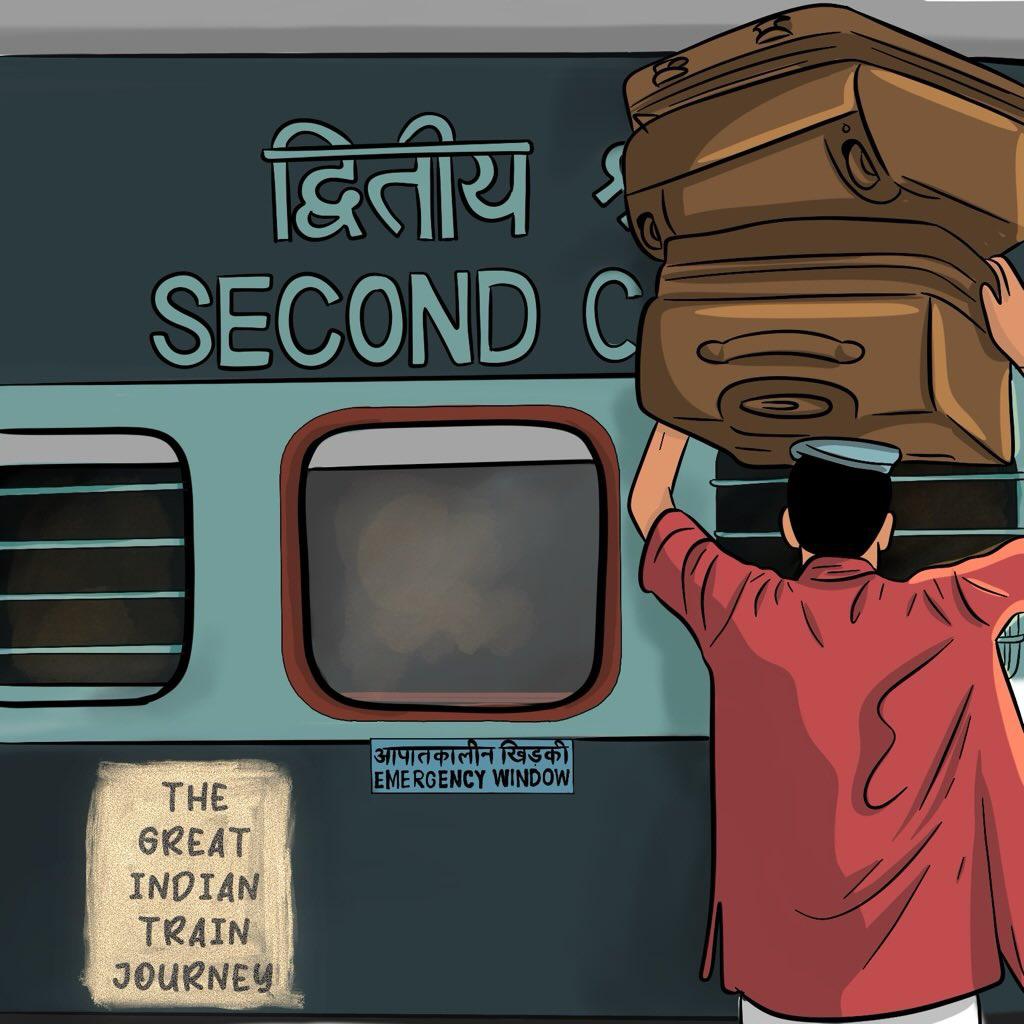
Indian Railways emerged when the British found it challenging to transport goods across the country. They pre-declared it as a “boon.” That’s why many nationalists and historians debunked the claim. They argued that the British people did so for business convenience. Subsequently, railway networks expanded significantly. Indian Railways has a total route length of 68,097 km (42,817 mi). It has more than 129,000 km (80,000 mi) of track and over 8,000 stations. It’s the fourth-largest railway in the world.
The railways have become integral to Indian life for decades, covering almost the entire country from Kashmir to Kanyakumari. With the addition of another communication channel, the train journey remains the most cost-effective long-distance option to date. With the advent of the Vande Bharat Express, Indian Railways has reached a new high. Still, the importance of locals, DMUs, sleeper classes, and goods trains has not dwindled. The goods carrier is the most essential form of transport for industrial products. In a nutshell, it’s a lifeline that can’t be replaced.
It generates one of the highest levels of employment in India. Revenue from the railway sector is one of the Indian government’s best sources of income. Notably, many young people prefer to pursue careers in the Railways because it offers a cushion of government job benefits.
From scenic beaches to deep forests, one can see and feel the wide range of biodiversity across India. This can be done simply by sitting in a train window seat. Traveling by train can also allow one to experience Rajasthan’s deserts. It also lets one enjoy the chilled atmosphere of Kashmir. These journeys capture the true essence of Indianness. Many foreign nationals take Indian trains to experience them, opting for the luxurious Maharaja trains. This luxury train chain transports them across the country, showcasing Indian cuisine and culture worldwide. Many travelers choose local berths. They want to experience the ground reality of India. They aim to understand the Indian vibe. Literary people often take train journeys as inspiration to create masterpieces. Authors Ruskin Bond and Odia poet Madhusudan Das fall into that category. Nowadays, vlogging and reel culture have also emerged.
Bizarre events are genuinely endless. They range from the haunted railway platform in Begun Podar to the infamous railway station in Central India. At that station, locals throw rocks at the moving train. The train journey is a moving entertainment theater on life’s big canvas. Let’s embark on an epic journey to the world of chaos. We will examine the key aspects of the train journey in detail.
 The Witty Stride
Leave a comment