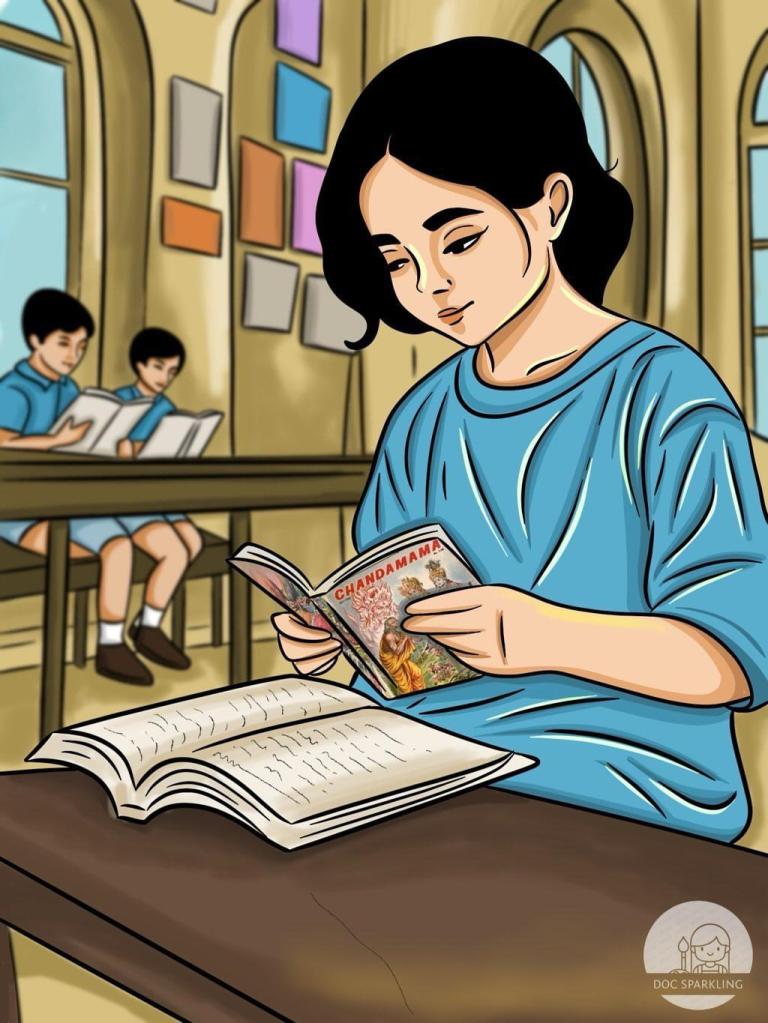
Back then, the most significant flex in school life was having a copy of the latest Chandamama. Getting it on the first of the month was even better. The monthly magazine was published in several regional languages, including English and Hindi. The cover page art was excellent. The illustrated inside stories focused on the moral development of kids at the time. Even the adults greatly admired the monthly magazine and its high subscription rate.
For the ’90s kids, the biggest hit among the stories was Vikram Aur Betaal. The TV serial was based on a story. In it, a ghost sits on the back of a king. The ghost then tells a tale. The story was incredibly popular. Schoolkids eagerly awaited the next chapter of the Vikram Aur Betal story every month. It’s like the old version of GOT Mania, but in the printed version. The Ramayana and the Mahabharata also played an essential role in the magazine’s fame among 90s kids. Many moral-boosting, humorous, and profound stories were told, accompanied by lovely illustrations. The artists who depicted the stories so well artistically were simply the best in the business. Now, digital illustration is in vogue, but back in the 1990s, print media illustration and caricatures were highly valued.
The magazine played a significant role in shaping the imagination of 90s kids. Many budding writers learned the art of storytelling by reading the magazine from cover to cover. Non-voluntarily, many young artists were inspired by the illustrations and drawn into the magical world of painting. If creation in abstract art has any substance, then Chandamama played a pivotal role in helping us learn it.
Some schoolchildren used to flaunt their new toys, cricket bats, watches, or grades among their peers. Meanwhile, some silent kids sat in the classroom corner. They eagerly leafed through the pages of the Chandamama. They enjoyed smelling the beautiful illustrations. They ravaged the excellent narratives. These silent kids hoped to write about them in volumes at some point in life! The smell of books — bibliosmia — became recognized among ’90s kids thanks to Chandamama. 90s kids used to manage to afford this masterpiece with pocket money and savings. Chandamama used to be the best friend of aspiring nerds during lunch breaks, Sundays, and holidays.
Reading and discussing comic books among friends was a trend in the 90s. The Marvel and DC universes have taken the cinematic experience to new heights. These universes make us realize the limitations of the printed version of the same storylines. Still, many argue that the printed version is more relaxed and original. This habit of reading comic books helped 90s kids discover Chandamama. They also found other closely guarded treasures of knowledge, such as The Wisdom magazine. Reading Chandamama among peers during school time is significant. It’s an intellectual reflection of a ’90s kid. The same applies to reading Wisdom.
The habit of reading magazines slowly has become obsolete with the rise of numerous entertainment TV channels and other media distractions. Many new-generation kids are unaware of Chandamama and Wisdom. New-age school-age kids navigate smartphones and tablets. They are well-equipped to access knowledge at their fingertips. But something is missing. The tangible feel of the fresh illustrations, the beautiful stories on the prints, and the pages’ beautiful smell are invigorating.
Reading has reached a new level with tablets and e-readers like Kindles. The likes of magazine-reading minds are diminishing day by day. The vintage magazine has been discontinued, but remains available to old souls to cherish for its years of publication. Anyone can still order old copies of Chandamama and enjoy this simple, yet artistic and literary masterpiece. Will this old habit of reading Chandamama be revived in the coming days? Hope is the best thing, and the best thing never dies.
 The Witty Stride
Leave a comment