– Satyakam Ray
Captcha tests are so common, yet sometimes are confusing. Read on to find out the nitty-gritty of the same…..
Ramesh Ray, a senior advocate, was browsing the internet on a Sunday evening. He encountered a section on a website. It required him to prove he was a living human, not a robot. Confused? He stumbled across the “I’m not a robot” CAPTCHA. As a novice at using technology, he miserably misidentified the sidewalks! The system declared him a bot and denied him access. The story of senior citizens failing the test is not new. Interestingly, despite being tech-savvy, the author has failed the ‘I’m not a robot’ captcha test multiple times.
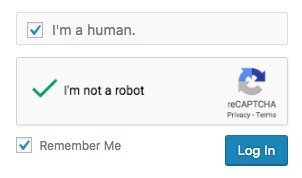
What is the CAPTCHA test?
The father of artificial intelligence, Alan Turing, developed the CAPTCHA test in 1950. He aimed to help determine whether a computer can exhibit intelligent behavior comparable to that of a human. Turing called it “the imitation test.” Not surprisingly, CAPTCHA stands for “Completely Automated Public Turing Test to Tell Computers and Humans Apart.”
Since then, numerous scientists working to secure network aspects in artificial intelligence have revised and redeveloped CAPTCHA. Louis Von Ahn is a consulting professor at Carnegie Mellon University. He developed the modern CAPTCHA and the reCAPTCHA. Google has acquired the reCAPTCHA.
Although the CAPTCHA tests can be troublesome, they are essential for security. Many automated bots have become increasingly sophisticated due to advancements in artificial intelligence. Bots are only computer programs. They cannot mimic human physical actions. This limitation drives the inclination for more complex CAPTCHA tests used today.
How do the users react to it?
However, the system’s essential security check elicits mixed responses from users. More tech-literate people consider the test compulsory as it involves the system’s security. They show a little bit more patience. However, the older and younger generations sometimes become restless upon encountering a CAPTCHA test. Many older people also fail the test. Small, low-quality pictures also contribute to the failure.
Many people with attention deficit disorder (ADD) or attention deficit hyperactivity disorder (ADHD) find identifying subtle differences in pictures challenging. The streetlights, sidewalks, crossroads, and cars are often blurred. One must restrain one’s eyes to see the images carefully. If one doesn’t have time to check, they might make mistakes.
Pointers on how to avoid mistakes?
Several key points should be considered when countering the test to avoid this minor issue.
- Be patient while completing the captcha test.
- Learn to spot the differences by carefully observing the picture.
- Read the instructions given before.
- If there’s any confusion, try the other Captcha.
- If you fail for any reason, don’t lose heart or patience. It happens to everybody.
- Keep yourself up to date on current technologies and applications.
Sometimes, failing is fun! In the digital world, there are numerous problems. Technical literacy, patience, and a sense of humor can help navigate the minor CAPTCHA test. Like Mr. Ray, after failing the Captcha test, he had the heartiest laugh over the years!
 The Witty Stride
Leave a comment