– Aparna Chatterjee
Since the beginning of life on Earth, living organisms have evolved from single-cellular to multicellular forms. After billions of years, life has evolved to the highest level of intelligence and more efficient cerebral function. Humans are considered the supreme creatures on the planet. As a result, humans have assumed responsibility for Earth’s fate.
Adapt- Survive- Evolve or perish has been the harshest truth of life. Many species did expire due to unfavorable habitats. Some died from natural disasters and predation. Earth has experienced five mass extinctions to date. This extinction period spans thousands to millions of years, and we, as the superior species, have accelerated this process. Humanity’s tendency to invade and exploit has put the planet in a dire situation. If we continue at the same rate, the ecosystems we know will collapse beyond repair. Let’s examine the species over the last decade to understand the severity of the situation.
- Pinta Giant Tortoise.
- Splendid Poison Frog.
- Pyrenean Ibex.
- Japanese River Otter.
- Yangtze Dolphin.
- Madagascar Hippopotamus.
- Christmas Island Pipistrelle.
- Alaotre Grebe.
- Formosan Clouded Leopard.
- Liverpool Pigeon.
- West African Black Rhinoceros.
Recent additions include the Eastern Mountain Lion, Northern White Rhinoceros, Spix’s Macaw, and Baiji.
Human activities have led to the extinction of billions of animals. Millions more species of flora and fauna are threatened with extinction.
Our schools taught us how human activities and encroachment on natural habitats have driven species to extinction. We have studied how pollution affects ecosystems globally and how plastic pollution depletes our natural resources. Even after such ‘proactive’ education, we have failed our planet and are driving it to worse conditions. Using public transportation, reducing electricity and water waste, and consciously avoiding plastic had a smaller-than-anticipated impact. So, let’s dive into a few groundbreaking reasons we knew but didn’t fully understand.
Plastic Pollution:
After years of identifying the causes of pollution, we haven’t found an effective way to significantly reduce them. Untreated sewage and industrial waste continue to be discharged into clean-water reservoirs. The condition of India’s rivers and lakes is no secret. It’s almost as if the earlier generation wants to avoid addressing the problems. They appear to stay in denial of the current situation. Among all types of pollution, Plastic pollution is the giant that needs to be remedied quickly.
Countries worldwide have attempted to ban single-use plastics, including plastic bags, straws, and Polystyrene products (also known as Styrofoam). Nevertheless, the production of these plastics continues. If the governments of these countries have banned them, why are they still being produced? These plastics can’t be reused or recycled and are dumped in landfills and the ocean. If your bathtub fills your bathroom, will you start mopping the floor or turning off the tap?
Plastic pollution on land is obvious. Cows, dogs, and birds often eat plastic or become entangled in it. This leads to their deaths. We have also polluted the deepest parts of the sea. A deep dive into the Mariana Trench revealed that plastics and microplastics contaminate the natural habitat.
The Great Pacific Plastic Patch
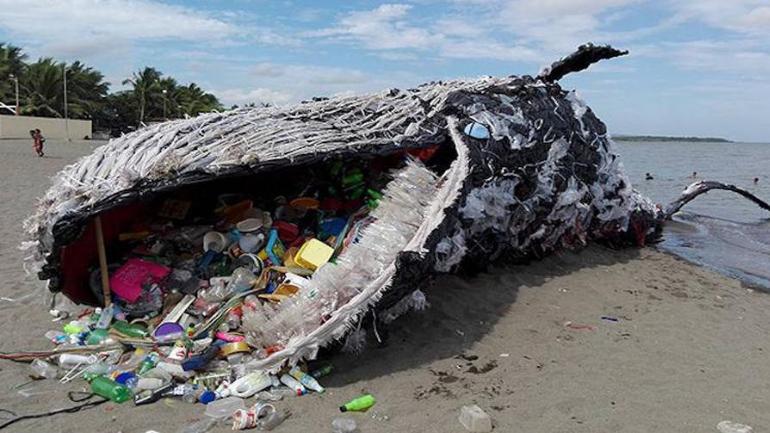
A massive patch of floating plastic accumulated due to ocean currents in the Pacific Ocean. This patch is three times the size of France. Plastic as old as the ’50s has been freely floating there. Fishing gear, nets, and other equipment make up more than 50% of this dump. Given the scale of the fishing we are witnessing, this figure is unlikely to decrease soon. The problem with plastic is that it is not biodegradable. It breaks down into smaller, thinner pieces. These pieces become an inherent part of the ecosystem and food chain. They pollute it at every level. It is also worth noting that plastic is toxic. It has been linked to carcinogenic properties when consumed in large quantities. Whales and dolphins that got beached were found dead, with their stomachs and intestines clogged with plastic. We have seen turtles and seals dying, wrapped in plastic. We are also observing microplastics in fish. Microplastic pollution is so harmful that we have even found fragments in human placentas.
Billions of animals are dying because of plastic pollution, and this is just the beginning. Even if you are not an animal lover, humans consume 50,000 microplastics each year, so we will soon reach that point.
Who is responsible?
You, me, everybody. But big corporations are more responsible. Coca-Cola is widely recognized as one of the most significant polluters. It is not the first time. Nestle and PepsiCo are not far behind. We all use products from Unilever, Procter & Gamble, Mar, and Colgate-Palmolive, as well as other well-known brands. The lack of alternatives necessitates reintroducing these products. Changing the process seems complicated. These companies have diligently worked to get the masses addicted to their products over the past few years. From bottled water to the products you use daily, they come in plastic bottles. The extent to which you recycle or reuse will determine the severity of plastic pollution others must contend with.
None of these companies has any accountability or has taken any actions to reduce the pollution they cause. Wealthy countries like the US, Canada, the UK, Germany, and Australia export their waste. They send it to Asian countries, including Vietnam, China, Malaysia, Thailand, and the Philippines. These waste barrels are shipped from the West to Asia, thereby increasing the carbon footprint associated with the damage. That is equivalent to binge eating ice cream while suffering from type 2 Diabetes. While Malaysia returned its waste shipment, Vietnam declared that it wouldn’t accept further waste shipments for recycling. China has banned nearly all waste imports, effectively halting the smuggling of non-recyclable waste. Other Asian countries are also poised to avoid becoming the dumping ground for the rich. After years of pressure, high-income countries have agreed to reduce plastic waste. While more than 60 countries have banned plastic bags, the water tap has undoubtedly not been turned off.
It seems the plastic pandemic is unlikely to end soon. The pandemic has been the year’s primary issue. The disposal of masks and PPE kits remains a question. We are already observing animals tied up in masks and suffocating on plastic. It is not only we who are gasping for air. The pandemic has given us a valuable lesson about the survival of the fittest. It reminded us that we, the superior species, are not at the top of the food chain.
 The Witty Stride
Leave a comment