– Satyakam Ray
Remember the Pandemic and S.O.S. calls posted on social media asking for immediate help for corona victims. A bunch of behind-the-curtain people worked day and night to address the S.O.S. calls and procure the needed things. Read on to find out more about this noble initiative...
The world experienced an unprecedented pandemic, and India was no exception. During the first wave, India had moderate success curbing the pandemic through a national-level lockdown. Subsequently, they had a few months to prepare for the next wave and strengthen their medical infrastructure. Still, complacency, massive crowd-pulling events like election rallies, and the Kumbh Mela exacerbated the situation. According to Anthony Fauci, the US-based global expert on coronavirus, India lowered its guard against the virus.
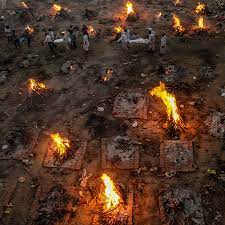
The noted medical journal The Lancet criticized Prime Minister Modi’s incompetence. They highlighted his lack of foresight for India’s dire position during the second wave. Floating dead bodies on the Ganges are things of the past now. Patients no longer die outside hospitals due to a lack of oxygen. The shortage of medical beds has also been resolved. It serves as a poignant reminder of what went wrong with the public health infrastructure. The judiciary contributed to bringing some order to the crisis of crisis management. But it was not enough.
A few Samaritans from diverse backgrounds stepped up to help those in need and alleviate their suffering. Along with frontline COVID warriors like doctors, nurses, healthcare workers, and police, these behind-the-scenes warriors answered the S.O.S. calls posted on social media by patients’ relatives. The patients were in dire need of hospital beds, medical oxygen, medicines, injections, I.C.U., ventilators, plasma, food, money, or little solace.
A similar analogy can be drawn from World War II. During the conflict between opposing countries, there were many casualties. Several unnoticed groups of the International Red Cross worked day and night. They volunteered to assist war victims, often without appreciation or recognition. In the animal world, worker ants work silently in groups, searching for food.
How did the groups function?
Hitesh, a data scientist in Bangalore, participated in such an initiative. He was a member of a WhatsApp group with around 40 active participants, all committed to the cause. They spent 2-3 hours daily on calls. They also used Twitter, Facebook, and Instagram to arrange medical care requested by patients’ relatives. He could call himself a proud S.O.S. call warrior.
These Pan-India groups comprised 1 or 2 active members from significant cities and the most affected small towns and cities. The person responsible for the city looked into all the details about that city on their own. This included obtaining the patient’s information and requirements and contacting the relevant person to verify them. They would also contact the hospital, plasma donors, and oxygen cylinder vendors to arrange the necessary resources. Finally, they guided the patient to the most appropriate choice available. Verifying the leads required much time and patience, as much cheating occurred in the medical oxygen supply. Many people had already been duped by con artists who demanded advance payment before providing their services. Thus, the S.O.S. call warriors contacted only vendors who accept patient payments after the service has been provided.
These selfless humanitarians had divided their team to handle the concerns separately. One team used the amplified tweets and posts and contacted the provided number or via DM to verify the details. Subsequently, they posted the same in the group chat. The other team followed their lead to arrange the required items and returned the details to the first team. Then the first team contacted the patient again and guided them. It’s like a virtual middleman concept in which no one interacts with patients, oxygen vendors, or anyone else. Sometimes, though, a few members exposed themselves to covid by physically checking the leads. Many such groups operated in cities, towns, and corporate offices across India.
Most of the team didn’t belong to the medical fraternity. Thus, fellow doctors, plasma donors, and other medical equipment suppliers were inducted into the S.O.S. group to guide them in this pursuit. Considering the case’s specific circumstances, the doctors verified the service’s practicality. They gave the team either a green signal to go ahead or a red signal to make infeasible requests.
The famed Dabbawallas of Mumbai work similarly. Their modus operandi has become a significant focus of case studies across Ivy League Business Schools.
Philanthropy has also entered the international circuit. Many NRIs and Indian students pursuing higher education abroad arrange for medical support back home in India. They leverage their social media presence to do this.
With the good intent behind the proactive group, the question arises. What was the success rate of providing the service to those in need? The answer is only 5-10%. In most cases, many leads proved infeasible or ineffective after hundreds of calls, a thorough search, and coordination. Many received criticism from close family members for pursuing their beliefs. They devoted much time to their busy professional lives. But as the spirit/Josh dwindles a bit? Hell no.
Hitesh found his own sense of self-satisfaction by helping others procure ICU beds, oxygen cylinders, or even plasma. However, he succeeded in a few cases after putting in considerable effort. The work is meant to be done by the authority or the government; these selfless S.O.S. call warriors did it.
An analogy to Ramayana:
In the epic Ramayana, Lord Ram planned to cross the sea to reach Ravana’s Lanka. A group of monkeys came to his rescue. With the help of the Banara sena, the seemingly impossible task was completed. Of course, the entire operation was guided by Lord Ram, Lord Laxman, and Lord Hanuman. The small Banara sena was performing its duties with full zeal. However, the so-called Ram and Laxman, described by people spiritually inclined toward the government, did not assume the leadership roles to which they were entitled.
Recognition
S.O.S. call workers didn’t get the social recognition they deserved, like frontline COVID-19 warriors. Like the Red Cross volunteers during World War II or the worker ants, the S.O.S. call warriors did their part selflessly without seeking fame. But their zeal to serve humanity fueled them to work even harder. A simple pat on the back meant a lot to them. Seeing the smiles on the faces of individuals or families affected by the Coronavirus encouraged them. It was enough for them to return to attending the next call.
As the situation has stabilized, the efforts of these S.O.S. call warriors are fading from public memory. But let’s celebrate these unsung heroes who volunteered to fight the COVID war and contributed their bit. A big, heartfelt salute to these S.O.S. call warriors! This incident proves that humanity exists and that a pandemic can amplify that hope.
 The Witty Stride
Leave a comment