– Satyakam Ray
During the creative flow process, the person channelizes all his élan vital to focus on the task on hand and try to perform 100% to get a sense of fulfillment, uninterrupted joy, and the feel of esteemed self-worth.
History suggests that many gifted writers and best-selling novelists work harder to achieve their optimum creative flow. Many others follow unique yet unconventional ways to get into their zone. Flow is a state in which ideas spontaneously arise. Skilled and experienced practitioners in the art seek to record the bitsas soon as possible. They do this to avoid missing the point while writing. Many wrote their magnum opus directly, scribbling on a notepad or a Word file.
Writers, artists, composers, musicians, and actors must enter their creative zones to produce masterpieces. They must tap into their inner energy, intelligence, emotions, and innovative ideas. Understanding the intricacies of creative flow and overflow, such as hypergraphia, and ways to enter the Zone is imperative.
Researchers refer to creative flow as a state of effortless attention that enables skilled performance in completing a task. During the creative flow process, the person channels all their élan vital toward the task at hand. They execute at 100%. They also experience fulfillment, uninterrupted joy, and a sense of esteemed self-worth. A creative writer’s personality and state of mind significantly affect the flow of their writing. External factors also play a role. The degree of motivation matters. More importantly, a calm and relaxed mind has a significant impact. Physical exercises and an active lifestyle also help to increase creative flow.
Many claim to get the flow from supernatural beings or in a dream state. This topic remains a topic of debate and doubt to some extent. Nevertheless, it falls outside the scope of this article.
How did famous writers deal with this?
Many eminent individuals believe in unconventional ways to begin creatively. Dan Brown is the author of books like The Da Vinci Code and Inferno. He uses the inversion technique of hanging upside down. This method helps him beat writer’s block and get into the groove. Charles Darwin often walked along a gravel path to organize his thoughts. Eccentric Catalan artist Salvador Dalí believed in the afternoon slumber theory as a means to enter the Zone.
In 1969, acclaimed science fiction writer Isaac Asimov proclaimed himself a compulsive writer. Lewis Carroll was the author of “Alice in Wonderland.” He also suffered from an overwhelming urge to write. Carroll penned over 98,000 letters in various formats throughout his life. The mysterious, ever-eluding creative flow, which every aspiring writer wants to get hold of, is miraculously abundant among certain persons. This creative overflow is a medical and psychological condition known as Hypergraphia. Writers such as Alice Flaherty use Hypergraphia to produce extensive papers and books.
Nitty-gritty of Hypergraphia:
In psychology, Hypergraphia is a behavioral condition characterized by the intense wish to write or draw. The writing style and content can vary from person to person.
Patients suffering from Hypergraphia tend to keep diaries, often meticulously detailing their everyday activities. They also write poetry. Additionally, they create lists and draw pictures of the places they lived in earlier ages. They write lyrics to songs they heard many years ago. Furthermore, they publish innovative stories that showcase their creative ability.
There are many accounts of patients writing in nonsensical patterns. One such pattern includes a center-seeking spiral. It starts at the edges of a piece of paper. Even a patient reported writing backward so that the writing could only be interpreted with a mirror. Some recorded their dreams in great detail and length. Scribbling down random thoughts ungrammatically on paper is a sure sign of Hypergraphia.
The science behind Hypergraphia:
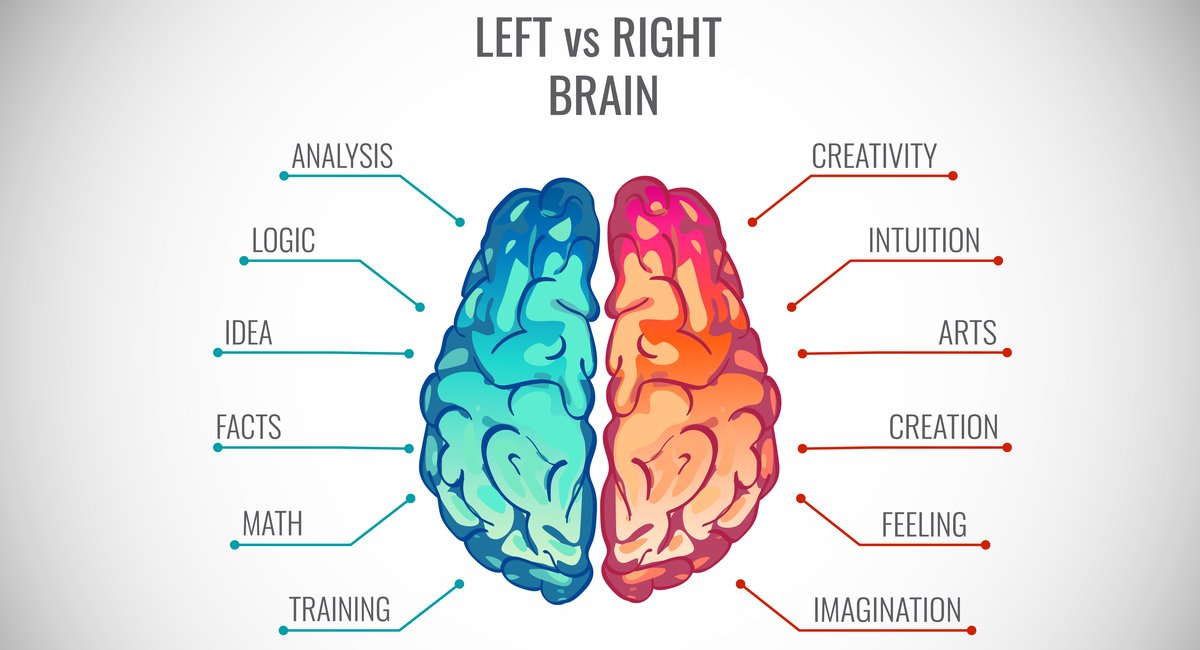
Hypergraphia is a symptom associated with temporal changes in epilepsy. Temporal lobe epilepsy may influence frontotemporal connections, increasing the drive to write in the frontal lobe, beginning with the prefrontal and premotor cortex, planning what to write, then leading to the motor cortex (located next to the central fissure), which executes the physical movement of writing. Functional MRI studies suggest that this rhyming behavior is generated in the right hemisphere. //info- credit Wikipedia.
“Creativity doesn’t wait for that perfect moment. It fashions its own perfect moments out of ordinary ones.” “If you want creative workers, give them enough time to play.” -Bruce Garrabrandt
The analogy to the real world:
Whether it is creative flow or creative overflow (Hypergraphia), one should record ideas as soon as possible. Otherwise, it will lead to overbearing mental trauma for some writers. The ideas need to be released to the public, and once they go public, the relief is unparalleled. The self-satisfaction, joy, and happiness that accompany the release of high-quality content are unique. This is true whether it appears in a short story, an article, a poem, or a novel. It can be compared with various small joys life can offer to us, such as:
- Getting the first salary
- The graduation day ceremony
- Getting a Yes for Date/Prom
- Enjoying the first rain on the roof or smelling the grass after the first rain
- It’s great to hear that you have passed a paper that you have not studied at all (only engineering guys can correlate)
Suggestions and Tips for Entering the Zone.
To unleash your creative potential, here are proven and innovative techniques to enter the mysterious bliss of the Creative Zone.
- Listening to a favorite song, track/album/artist
- Doing physical exercises like running, swimming, or walking
- Marathon coding or doing integral calculus
- Reading 2-3 books at a time
- Sitting in solitude on the balcony
- Roaming around in the woods or visiting a nearby natural park
- Watching the sunrise or sunset
- Doing Meditation or yoga
- Counting stars in the midnight sky
- Talking to a close person or confidant
Any budding writer, columnist, or avid reader can try at least one of the techniques mentioned to get into the groove.
Getting into the creative groove is the most pertinent thing for a creative writer. Every budding writer who wants to make a difference through their writing should focus on entering the “zone.” They should also explore their creative flow.
 The Witty Stride
Leave a comment