– Satyakam Ray
Writer’s Block: The inability to develop new ideas can hinder progress. It is challenging to produce unique content within a strict deadline. The drive to write the magnum opus is often thwarted by perfectionism. These struggles can lead to prolonged periods of blankness. The ink might dry slightly, insinuating frustration and desperation for the Writer. Yet many authors belittle the problem by calling it “excessive leisure time.”
Thoroughly studied by Austrian psychoanalyst Edmund Bergler, Writer’s block has been extensively discussed in the creative community. Eminent professionals such as author F. Scott Fitzgerald, cartoonist Charles M. Schulz, and songwriter Adele have suffered from Writer’s block. Somehow, they have overcome the constraint. Few are unlucky, though, who quit writing, just like Herman Melville, the Writer of Moby-Dick.
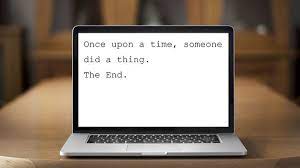
Reasons for Writer’s Block: Various factors can contribute to Writer’s Block.
- Stress due to a deadline
- Lack of Inspiration
- Distraction from writing
- Physical discomfort
- Mental depression
- Lack of self-confidence
- Unsuitable genre
- Absence of a love life
- Lack of motivation
- Absence of Instant Gratification
- Propensity for Perfection
- Anxiety
The neuroscience behind Writer’s Block: People suffering from Writer’s Block often experience stress. Stress leads the brain to control the cerebral cortex and the limbic system. The cerebral cortex is responsible for our creativity and intellect, while the limbic system governs our instincts. Neurologist Alice W. Flaherty has argued that literary creativity is a role of specific brain areas. That block may disrupt brain activity in those areas.
To overcome writer’s block, the person’s thought process should shift from the left to the right hemisphere of the brain. Writing is an art; specifically, creative writers use their imagination. Ideation and idea elaboration can be done effectively and profusely using the right brain.
“The only cure for not being unable to write is to write.”- Kaylin R. Boyd
Concepts Associated with Writer’s Block:
- Mind Mapping—One Solution to Writer’s Block. The Writer should write down all the topics linked to the central character on a single piece of paper. If possible, draw the issues and connect them. The flow will automatically come, and so will the navigation.
- Hypergraphia means a strong urge to write. In this condition, the Writer’s temporal lobe is damaged, contributing to Writer’s block.
- Brainstorming sessions can help you discuss various ideas and their merits and demerits. Constant feedback from peers and seniors in the profession is crucial for character development in creative writing.
- Brain lateralization is the tendency for certain neural functions or cognitive processes to specialize in one side of the brain. It gives rise to the concept of the brain’s left and right hemispheres.
- Clustering – Dividing the whole story into sub-stories and elaborating on each sub-story.
- Eureka Point: an idea suddenly sparks. This happens after a thorough effort to reignite the muse. Many attempts might fail miserably. This moment is known as the Eureka Point.
10 Innovative Ways to Beat Writer’s Block: (My Take)
- Switching on or off the bed lamp – It may sound like a story of a love-struck soul. Believe me, it helps you think clearly. This is useful when you’re stuck between choosing the direction of the narration.
- Taking a bus ride in the city: Travel by public transport, preferably a bus, and sit by the window. Look out at the immense horizon of people going about their businesses and watch closely. This will inspire you to write new material.
- Watching an ant line—If the mind is in a muddle, watch the food-searching ant colony in a park. It can give subtle insight into various perspectives on life. Close observation of the ant colony helps beat Writer’s block.
- Taking a shower—Scientifically, mundane activities like showering help eradicate negative feelings and anxiety. They also help one focus on the writing and creative process.
“Write.
Write it right.
Write it wrong–but write it!” –Jessica de la Davies.
- Sitting at the railway station—If you want to write about philosophy and current events, visit the nearest railway station. Choose an empty chair in the corner and watch as the herd of people approaches their destination. It is a ritual for retrospection and soul-searching.
- Listening to metal songs—If you are stuck in article/novel writing, listen to hard rock metal. The more chaotic the environment, the more precise the brain becomes. The 1960-70 genre is my favorite.
- Solving Calculus Problems. Solving double integral calculus problems is not only the prerogative of an aspiring physician or mathematics scholar. If anyone is unfamiliar with calculus, they can choose puzzles, Sudoku, or watch Brain Games on National Geographic! A content writer can gain from this, as it helps restore the quintessential focus of writing.
- Reading in the Crowd– Pick some books at a nearby bookstore. If the store is noisy, do not complain; just read. If that is impossible, switch on the TV loudly and try to read! Contrary to what you think, this helps to rekindle the writing spark.
- Binge-watching– Take some time off writing if you are stuck in the middle and watch your favorite Netflix/Prime/Hot Star series. This is a proven way to beat Writer’s block, at least for me.
- Sleeping during a Presentation in the office. Lastly, I employed my ingenious method to overcome writer’s block. When someone in the meeting rambles about a presentation, take a quick, discreet nap. Do not blame me if your superior ever catches you during such an activity! The nap process is Eureka Point’s best way to spark ideas.
These ten ways are my take on how to beat writer’s block. Depending on the situation, you can take any of these suggestions.
Inspiration—Dan Brown, the author of The Da Vinci Code, hangs upside down as a cure for Writer’s block. According to Brown, this so-called inversion therapy helps him relax and concentrate better on his writing. If watching the world from an inverted angle helps him write such classics, we should encourage these unconventional perspectives. They are essential. The more he does it, the more relieved and inspired he feels to write.
“You can always edit a bad page. You can’t edit a blank page.”- Jodi Picoult.
Random stuff like watching a child’s paper boat & sketches inspires. The smile of a total stranger on a train is inspiring, too. Random waving from rural children to a guy standing on the edge of a moving train inspires. The joy of school children in the ice cream parlor encourages creativity. Facebook posts from random people and advertisement hoardings can be sources of inspiration. Lastly, the laughter of a girl on the nearby balcony inspires one to write an epic story, blog, or novel. Just keep looking for inspiration, and keep the notebook and pen ready! Because the creative flow can occur at any moment.
 The Witty Stride
Leave a comment